
Boost Skills with Effective Self-Assessment Techniques Top Tips

Developing new skills is a lifelong journey, and for many people it happens outside formal classrooms. You decide what you want to learn, you gather resources, and you put in the hours—often in the margins of a busy life. That independence is empowering, but it also creates a problem that traditional education solves for you: in a class, someone else defines the standard. You get grades, rubrics, deadlines, and feedback. When you’re learning on your own, it’s easy to drift into a vague sense of “I think I’m improving” without being able to prove it.
That’s why skill development depends so heavily on self-assessment. It’s the mechanism that helps you stay honest. It keeps you from practicing the wrong things for too long, or from overestimating what you can do because you’ve watched a lot of tutorials. Self-assessment not only provides clarity on your strengths and weaknesses but also guides your learning path and improves overall performance. Without it, your learning can become a pile of effort without direction. With it, effort becomes a system: you evaluate, adjust, and continue with more precision.
Effective self-assessment doesn’t have to be dramatic or time-consuming. It can be built into your routine in small ways: a weekly check-in, a quick review of what you struggled with, or a simple benchmark test. The value comes from consistency and structure. When you assess your skills regularly, you start noticing patterns: what comes easily, what always trips you up, and what kind of practice actually moves the needle.
Employing strong self-assessment techniques can significantly enhance your ability to learn independently and achieve your goals. These methods help you identify skill gaps, uncover blind spots, recognize hidden strengths, and accelerate progress. Below, we’ll explore the Top 5 self-assessment techniques that can make a real difference, not only in how you measure growth but also in how you design your next steps.
- Reflective Journaling – Keep a record of your experiences and thoughts.
- Goal Setting – Define measurable and realistic objectives.
- Feedback Solicitation – Seek constructive criticism from peers.
- Self-Rating – Regularly evaluate your skills against set criteria.
- Skills Inventory – Create a detailed list of your competencies.
As you explore these techniques, you’ll see that self-assessment isn’t an “intro step” you do once. It’s an ongoing loop that becomes more valuable over time. It’s how you stay on track, how you avoid plateaus, and how you build real mastery rather than temporary confidence.
Top 5 Effective Self-Assessment Techniques for Skill Improvement
Skill improvement is rarely about one big breakthrough. It’s about steady, often unglamorous progress: small corrections, repeated practice, consistent reflection. The people who grow fastest aren’t necessarily those who work the hardest; they’re often the ones who measure effectively. Self-assessment gives you a way to measure without waiting for external validation. It reveals what’s working, what’s wasting time, and what your next training focus should be.
Below are five techniques, ranked from fifth to first, that help you assess yourself with more accuracy and usefulness. You can use one technique, but they work best when combined. Journaling captures context, goals create direction, feedback adds outside perspective, self-rating adds structure, and a skills inventory builds the map.
5. Journaling Your Progress
Journaling is one of the simplest self-assessment tools, but it’s also one of the most reliable. When you document what you worked on, what felt difficult, and what improved, you create a record that your memory can’t provide accurately. Memory is biased: we tend to remember the highlights and forget the slow, incremental changes. A journal keeps the truth.
Journaling doesn’t need to be poetic. It needs to be useful. The goal is to capture enough detail that you can spot patterns over time. When you do that, you stop relying on mood to judge progress. You can look back and see: “Two months ago I struggled with this concept; now I handle it more naturally.” That’s the kind of evidence that keeps you motivated and focused.
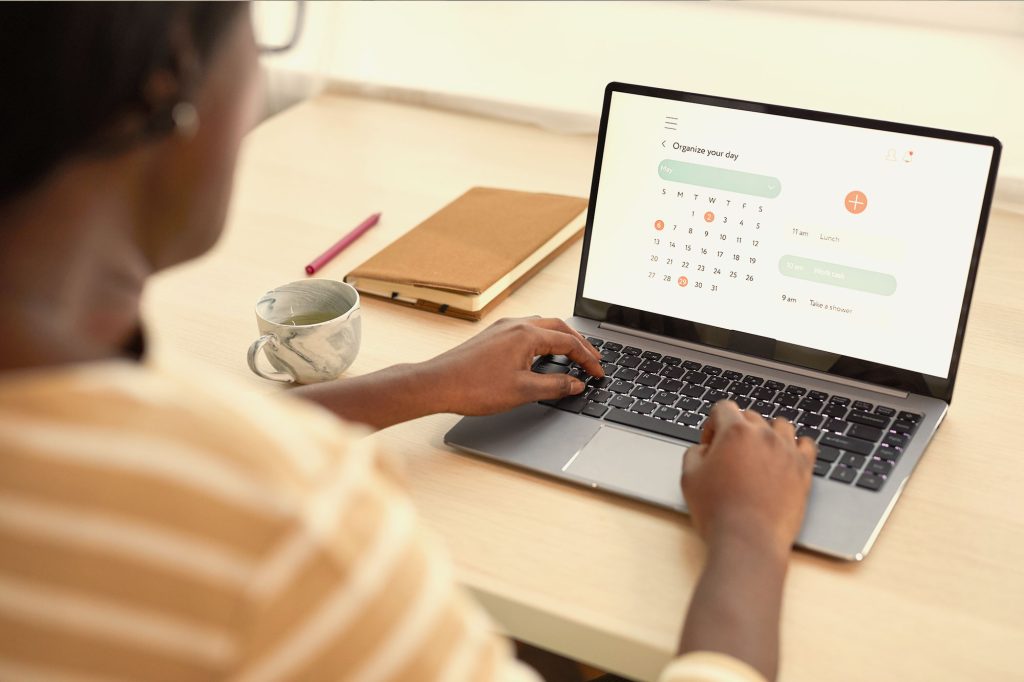
In your journal, consider maintaining sections like:
- Daily Challenges: What felt hard today? Where did you slow down or get stuck?
- Insights Gained: What did you learn that changed how you see the problem or skill?
- Future Goals: What is the next skill or sub-skill you want to tackle?
This habit is ranked fifth not because it’s weak, but because it’s supportive. Journaling shines when it feeds into other techniques. It provides the raw material for goals, self-rating, and reflection.
4. Peer Feedback Sessions
Self-assessment improves dramatically when you add outside perspective. Humans are good at missing their own blind spots. That’s not a flaw; it’s normal. Peer feedback sessions help because someone else can see what you can’t—especially in skills that involve communication, performance, design, or any visible output.
Peer feedback doesn’t need to be formal. It can be a casual review with a friend, a community critique, a mentor check-in, or a structured workshop. The key is to request feedback in a way that produces actionable information. “What do you think?” usually gets vague answers. “What is one thing I should improve next?” gets clarity.
During peer feedback, focus on:
- Specific Skills: Ask for feedback on concrete pieces of your performance or output, not your personality.
- Suggestions for Improvement: Request next steps, not just criticism.
- Peer Reflection: Share what you’re working on and ask what helped them improve in similar areas.
Peer feedback also reduces isolation. Learning alone can be mentally heavy. A small feedback loop with others turns learning into a shared process and builds accountability.
Practical observation #1: when you ask for feedback, include a short “context + question” format: “Here’s what I’m trying to achieve. Here’s what I did. Where is the biggest gap?” This approach often produces sharper, more helpful responses than open-ended requests.
3. Setting SMART Goals
Goal setting is often treated as motivational, but in self-assessment it’s primarily diagnostic. Goals create a standard. Without a standard, assessment becomes opinion. SMART goals—Specific, Measurable, Achievable, Relevant, Time-bound—turn learning into something trackable.
If your goal is “improve my writing,” how do you measure improvement? It becomes subjective. But if your goal is “write three short essays and reduce filler words by 30% in four weeks,” you can measure progress.
When creating SMART goals:
- Specific: Define what success looks like in concrete terms.
- Measurable: Choose metrics you can track—scores, outputs, frequency, speed, accuracy.
- Achievable: Set goals that fit your real schedule, not your ideal fantasy week.
- Relevant: Tie goals to your broader objectives so you don’t waste energy on low-impact learning.
- Time-bound: Use a deadline to create momentum and prevent endless “later.”
SMART goals also make self-assessment less emotional. You don’t have to guess how you’re doing—you can check. That reduces anxiety and improves decision-making.
2. Virtual Skill Assessment Tools
The digital world offers structured tools that can support self-assessment, especially for skills with clear benchmarks. These tools provide standardized tests, progress tracking, and sometimes even diagnostic feedback. They don’t replace real-world practice, but they can provide data that helps you calibrate your self-view.
Examples include:
- Codecademy: Coding exercises with immediate feedback, useful for building fundamentals and measuring progress.
- Duolingo: Language practice with gamified repetition and skill checks, helpful for consistency and basic proficiency tracking.
- Skillshare: Project-based learning, often with feedback opportunities in creative domains.
These platforms are useful because they reduce subjectivity. They offer benchmarks, and benchmarks help you avoid two common errors: overconfidence (“I watched the videos, so I know it”) and underconfidence (“I’m not improving at all”). Data helps you see reality.
Practical observation #2: use digital assessment tools as “checkpoints,” not as your entire training plan. A weekly or bi-weekly checkpoint can reveal gaps and guide your next practice focus. But if you only train inside the platform, you may struggle when the context changes. Make sure you apply skills outside the tool—projects, real conversations, real outputs.
1. Reflective Self-Assessment Techniques
At the top is reflective self-assessment, because it integrates everything else and makes improvement sustainable. Reflection is not the same as vague “thinking about your progress.” It is structured evaluation: what happened, why it happened, what you will change next.
Reflective techniques help you build a complete picture of your growth. They reveal patterns across months, not just days. They also connect skill development to your environment and habits: “I improve most when I practice in the morning,” “I stall when I avoid feedback,” “I get better when I focus on one sub-skill for two weeks.”
Useful reflective tools include:
- SWOT Analysis: Identify strengths, weaknesses, opportunities, and threats that affect your skill development.
- Reflective Questions: Ask: What did I learn? What did I avoid? What confused me? What should I practice next?
- Long-Term Reflection: Review trends over time by comparing older goals and performance to current results.
Reflection is ranked first because it keeps you adaptive. Self-learning is not a straight line. Your goals change, your schedule changes, and your interests evolve. Reflection is what keeps your learning strategy aligned with reality.
By applying these self-assessment techniques, you create a learning process that is both structured and flexible. Journaling captures details, peer feedback reveals blind spots, SMART goals define direction, digital tools provide benchmarks, and reflection ties it all into a loop of continuous improvement.
| Category | Details |
|---|---|
| Goal Setting | Using SMART goals provides clarity and direction, making self-assessment more objective and targeted. |
| Feedback Mechanisms | Using 360-degree feedback helps uncover blind spots and strengthens continuous learning through outside perspective. |
| Reflective Journaling | Journaling improves self-awareness by capturing struggles, insights, and patterns over time. |
| Skills Inventory | A skills inventory maps current abilities against desired competencies, helping identify gaps and prioritize improvement. |
FAQs on Effective Self-Assessment Techniques for Skill Improvement
What is self-assessment, and why is it important for skill improvement?
Self-assessment is evaluating your own skills and performance using structured methods. It matters because it helps you identify strengths, weaknesses, and next steps. Regular self-assessment leads to more targeted efforts and accelerated growth because you stop guessing and start training deliberately.
How often should one perform a self-assessment for optimal results?
It depends on the skill and your goals. A common rhythm is weekly mini check-ins (short reflection and progress review) and deeper reviews quarterly or bi-annually. The key is consistency: enough frequency to adjust quickly, enough time to see meaningful change.
Are there specific tools recommended for conducting a thorough self-assessment?
Yes—SWOT analysis, structured checklists, online skill tests, and reflective journals are practical tools. Journals and reflective writing are especially valuable because they capture context and patterns over time.
Can self-assessment alone lead to significant skill improvement?
It helps, but it’s most effective when combined with practice and external feedback. Self-assessment tells you what to fix; deliberate practice fixes it. Peer or mentor feedback adds perspective you may miss alone.
What are some common pitfalls when conducting self-assessments?
Subjective bias is a big one—overestimating or underestimating ability. Lack of structure is another: vague reflection produces vague results. Using criteria, benchmarks, and consistent review methods helps reduce these pitfalls.
Conclusion: Mastering the Art of Self-Assessment for Skill Improvement
Self-assessment is one of the most practical skills a self-learner can develop because it keeps improvement grounded in reality. The techniques we covered—journaling, peer feedback, SMART goals, digital assessment tools, and reflective evaluation—work together to clarify where you are, where you want to go, and what to do next.
To end simply and honestly: self-assessment won’t replace hard work, and it won’t eliminate frustration. But it will prevent you from wasting time. It helps you stop practicing blindly and start practicing strategically. If you build a small habit of checking your progress and adjusting your plan, your learning becomes more reliable. Over time, that reliability is what turns curiosity into competence—and competence into real confidence.